
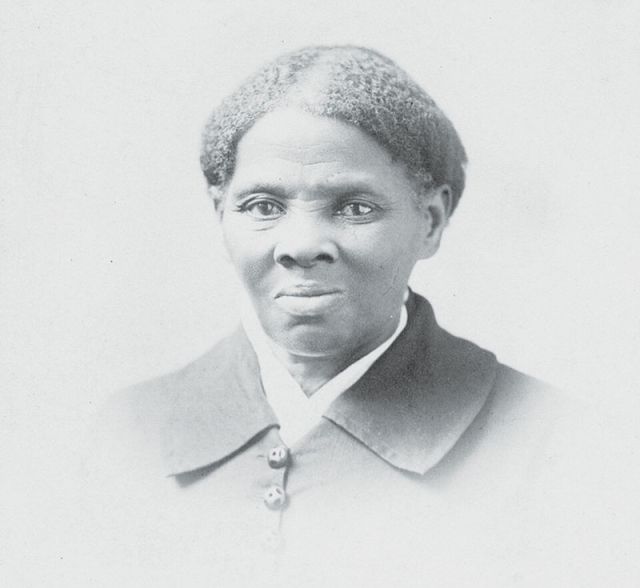
Founders & Guardians - Harriet Tubman
© 2026, M. R. McGough, LLC
“I had reasoned this out in my mind; there was one of two things I had the right to, liberty or death; if I could not have one, I would have the other.” - Harriet Tubman
Although the exact date of her birth is not known, Araminta “Minty” Ross was born c.1822, in the late winter or early spring. She was one of nine children born into the enslaved family of Harriet and Benjamin Ross. Her father was an enslaved timberman in Dorchester County in Maryland’s Eastern Shore, and her mother was an enslaved domestic worker. As was common, the Ross family was slip up among other enslavers.
As a child, Minty was the victim of beatings and whippings at the hands of her enslavers. Early in her adolescent years she suffered a head injury when an irate overseer threw a heavy weight at another enslaved person but hit her by mistake. Complications from that injury, including headaches, seizures, and periods of unconsciousness, were with her the rest of her life. Early in life, she developed an intense spirituality, which motivated her to seek freedom for herself and then to lead others as they sought it. She believed strongly that liberation from enslavement was a public and democratic imperative. Her deep faith was a constant source of strength in the worst of times, and a source of endurance under the cruelest and most brutal circumstances.
As a young woman, Araminta struggled to find some level of independent action. She negotiated with her enslaver so she could select her own work assignments. He agreed but only under the condition that she pay him a portion of any money that she made. Because of that arrangement, she had the chance to reunite and work with her father. That experience in the timber fields brought her in contact with enslaved sailors and others who were familiar with that region and the network that had developed to support enslaved people trying to move north to liberation and freedom—the Underground Railroad.
At age 22, Araminta Ross married a freedman named John Tubman. Once married, she changed her name to Harriet Tubman. Times with her husband and her father would be pleasant memories, but they were short lived. When her enslaver died in 1849, it was likely that she would be sold to settle his debts. That’s when she decided to make her way to freedom in Pennsylvania. After a brief stay in Philadelphia, she returned to Maryland to begin leading others to freedom. She found her husband only to learn that he had remarried. Although deeply hurt, she refused to give up her freedom, and she resolved to continue leading others north to freedom. The Fugitive Slave Act of 1850 required the return of fugitive slaves, even if they were found living in a free state. “Moses,” as Tubman was known by those she led, then began moving her freedom seekers further north into Canada.
In 1857, she moved her parents and some other members of her family to Auburn, New York. She purchased a house from William H. Seward, a New York Senator and an abolitionist who became Lincoln’s Secretary of State. The next year, she met with abolitionist John Brown. She provided inspiration and helped him plan his raid on the US arsenal at Harper’s Ferry, Virginia (later West Virginia).
During the Civil War (1861-1865), Tubman become a Union spy, informant, nurse, and cook. In June of 1863, she played a major role in a raid along the Combahee River in South Carolina. Soldiers involved in that action, set fire to several plantations, destroyed Confederate supply lines, and freed more than 700 slaves. Many of those enslaved individuals joined the Union forces. Tubman was awarded a military pension for her service.
In 1869, Tubman returned to Auburn, and married Nelson Davis, a Civil War veteran who had himself been enslaved. They adopted a daughter who they named Gertie. Following the passage of the 13th Amendment which ended slavery, Tubman and other abolitionists turned their attention to racial equality and universal suffrage. Harriet became a cofounder of the National Association of Colored Women. She was also an active supporter of the Freedmen’s Bureau, established to expand opportunities and provide basic supports for formerly enslaved people. Harriett Tubman, died on March 10, 1913 of pneumonia.
Tubman has been recognized and memorialized in many ways. She has been honored as the namesake of naval vessels, roads, schools, and parks. She has been memorialized on postage stamps and commemorative coins. By an act of Congress in 1990, May 10th was designated as an American holiday known as Harriet Tubman Day. And in 2024, she was posthumously commissioned a one-star general in the Maryland Army National Guard.
When in 1849, Tubman realized that, “. . . there was one of two things I had the right to, liberty or death. . .,” she chose liberty. Finding her path toward the American Dream was a personal pursuit that required difficult decisions and stoic commitment. Having found her path, she made herself accessible to those seeking that same passage toward that Dream. Harriet Tubman’s legacy, rests solidly in her courage, strength of character, and compassion. In her struggle to find personal freedom, she came to terms with harsh realities. She did so to move closer to the opportunities she sought for herself and others. Through it all, she demanded the respect of equality, and she won it. For those seeking a path toward the American Dream, she offers a legacy-laden model of what respect, real universal human respect, is all about!
Picture Caption: On her trips north to freedom, Tubman used the North Star as her guiding light. She did so based on her belief that, "God's time is always near. He set the North Star in the heavens; He gave me the strength in my limbs; He meant I should be free."