
Founders & Guardians - Jimmy Stewart
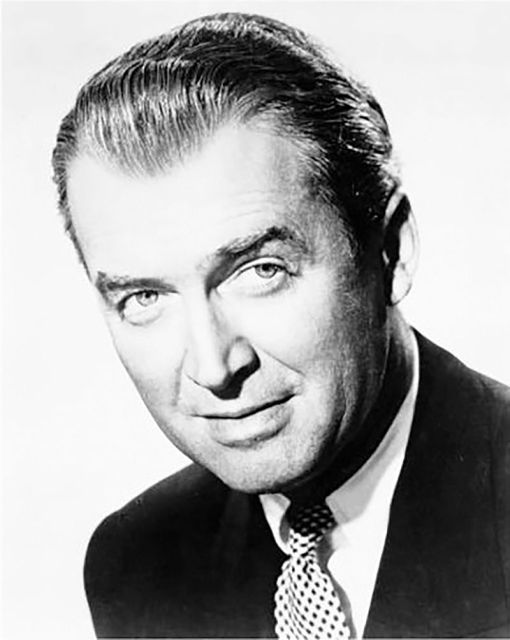
© 2026, M. R. McGough, LLC
“The secret to a happy life is to accept change gracefully.”
(Jimmy Stewart)
James Maitland Stewart was born on Wednesday, May 20, 1908, in Indiana, Pennsylvania. He was one of three children born to Alex and Elizabeth Stewart. Jimmy enjoyed a comfortable childhood in a close-knit family, where he learned personal virtues that he carried into his acting. After attending the model school at Indiana Normal School for his early education, he attended Mercersburg Academy then enrolled in Princeton.
At Princeton, young Steward majored in architecture and was involved in theater. After graduation, he joined a small theater group in Falmouth, Massachusetts. That group only lasted briefly, but he made a friendship that lasted a lifetime, when he met Henry Fonda. Later that year, he moved to New York and began acting on Broadway, where he was noticed by several critics.
He signed a contract with the movie company Metro-Goldwyn-Mayer in 1934, and he debuted with Spencer Tracy in the movie, The Murder Man the following year. Stewart’s roles in two late 1930s movies, You Can’t Take It With You and Mr. Smith Goes to Washington, were the beginning of his rise to stardom. For his role in the 1940 film, The Philadelphia Story, Stewart won Best Actor in the 1941 Academy Awards.
Following a family tradition that went back to the Revolutionary War, Stewart enlisted in the Army early in 1941. As a licensed civilian pilot, he was assigned to the Army Air Corps. He was one of the first Hollywood stars to enlist. After military pilot training, he became a B-24 instructor, then assumed command of a bomber squadron in Europe. He attained the rank of colonel, by the end of the war. For his service, which included more than 20 bombing missions, he was awarded the Air Medal and the Distinguished Flying Cross. He continued his military service in the Air Force Reserves. In 1959, he attained the rank of brigadier general. Two years prior to his retirement from the Air Force in 1968, he flew as an observer on a B-52 mission over Viet Nam.
After World War II, Stewart returned to the big screen. He won an Oscar nomination, for his role as George Bailey in the 1946 film It’s a Wonderful Life. The movie enjoyed limited box office success, but it has become a classic television staple during the holiday season. Regarding Stewart’s role in that movie, President Harry Truman said if he and his wife had had a son, they would have wanted him to be just like Jimmy Stewart. Those close to Stewart said the person they knew was very much like the actor the world saw in his movie. By most accounts, It’s a Wonderful Life was Stewart’s favorite movie.
Stewart married Gloria Hatrick McLean in 1949. They had twin daughters, and they raised Gloria’s two sons from a previous marriage. Jimmy Stewart was a devoted husband and father, sharing the love and morals he had learned as a child. The Stewarts were married for 45 years when Gloria, who Jimmy called the love of his life, passed in 1994.
Throughout the decades after World War II, Stewart transitioned into broader and more complex screen roles, demonstrating his versatility and his range. He starred in psycho-suspense movies such as Rear Window (1954) and Vertigo (1958), as well as a number of westerns, including Winchester ’73 (1950) and The Man Who Shot Liberty Valance (1962). At the same time, he also starred in movies like Mr. Hobbs Takes a Vacation, a 1962 comedy about a family beach vacation, that has its share of humorous chaos but ends well with the family having enjoyed their time together. Both in his personal and professional life, Stewart demonstrated a willingness and ability to adapt gracefully to change.
In the movie Mr. Smith Goes to Washington, Stewart’s character, Jefferson Smith, while speaking before Congress, passionately says, “I wouldn't give you two cents for all your fancy rules if, behind them, they didn't have a little bit of plain, ordinary, everyday kindness and a little looking out for the other fella, too.” Values Stewart learned early in life and demonstrated throughout his life included plain, ordinary, everyday kindness, and a willingness to look out for others.
For his life’s work and military service, Jimmy Stewart received numerous awards and recognitions. In 1985, he received an Academy Award for lifetime achievement. That same year, he was awarded the Presidential Medal of Freedom by fellow actor, President Ronald Reagan. At the age of 89, Jimmy Stewart died on July 2, 1997. Honoring Stewart’s life and legacy, President Bill Clinton referred to him as a national treasure.
Stewart’s genuine, empathetic, and typical-American manner made him an all but timeless actor, with whom several generations could easily identify. During his more than half a century in the industry, he acted in some 80 films, performed on stage, and appeared on two briefly run televisions shows. He was a frequent guest on talk shows, where he made a commonplace interview a pleasant glimpse into the American character. The Jimmy Stewart Museum in Indiana, Pennsylvania may best sum up Stewart’s legacy, in what is termed the Jimmy Stewart Effect. Just as George Bailey demonstrated in It’s a Wonderful Life, Stewart lived his life fulfilling his American Dream. In the process, he had the enduring effect of making the world a better place, just because he was in it!
Picture Caption: Stewart became an accomplished accordion player. His first accordion was a gift from his father, who had accepted it as payment from a customer to settle an account at the family’s hardware store in Indiana, PA.