
A New Evolution Of OPS For Modern Engines
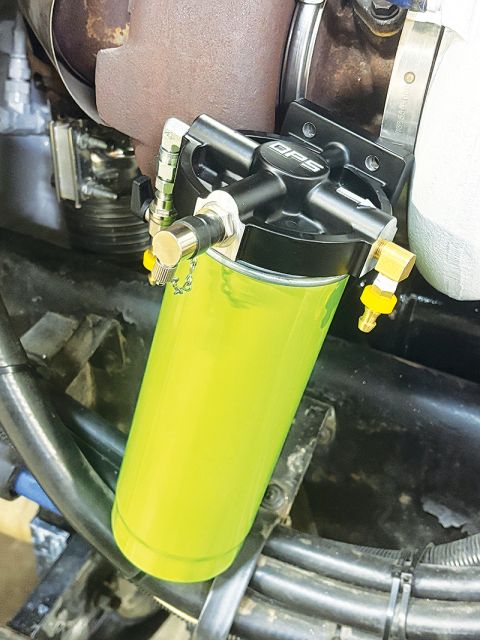
Downtime is always a surprise, at least that is what the paperwork says. Out in the real world, most engine failures do not show up like lightning. They show up as a slow grind: heat, soot, fine debris, and oil that keeps doing its job right up until it does not. And because the truck still starts and pulls, it is easy to pretend everything is fine, until it is fine on the side of the road.
That is the whole point of OPS Gen 2. It is built for the miles between oil changes, where the damage actually happens, caused by microscopic contamination circulating through tight clearances all day, every day, wearing things down one invisible scrape at a time. You can run good oil, you can have a clean-looking dipstick, and you can still be grinding away at bearings and rings like you are trying to “save money” in the most expensive way possible.
OPS Gen 2 leans hard into filtration because that is where it counts. It uses a synthetic micro glass filter designed to catch particles down to 3 microns, the stuff you are not going to see, feel, or brag about, but the stuff that contributes to long-term wear. Long-term wear is exactly how you end up writing five-figure checks while telling yourself it “came out of nowhere.” Keeping that fine contamination out of circulation is how you make the engine’s life easier and your wallet less emotionally involved in your maintenance plan.
Gen 2 also takes a more modern approach to system design. Engines built since the mid-to-late 2000s often run hot enough, depending on duty cycle and operating temps, that some liquid contaminants can be driven off during normal operation. So instead of leaning on an external evaporator as the centerpiece, Gen 2 keeps filtration and monitoring as the main act. Translation: fewer extra parts to mount, fewer things to route, and fewer “creative” installation solutions that look good until service day.
Now let’s talk about the part that directly saves you money. OPS Gen 2 gives you real-time visibility into oil condition, so you can make smarter decisions instead of changing oil on a calendar just because that is how it has always been done. When you can see what the oil is doing, you can tell the difference between oil that is actually done and oil that is still serviceable. That means you are not automatically dumping good oil, and you are not gambling by running oil that is past its usefulness either. It can also help you identify when you need to add base oil to maintain the proper level and keep the oil performing correctly. In plain terms, it helps you decide whether to change the oil, add base, or let it keep going.
And speaking of decisions, let’s talk about oil sampling. The old way usually involves a mess, wasted time, and someone saying they will do it later. Later turns into never and never turns into guessing. OPS Gen 2 includes a push-button sampling valve, which means you can pull a clean sample quickly without turning it into a production. When sampling is easy, it happens, and oil analysis becomes useful instead of decorative.
Because one oil report does not tell you much. It is a snapshot. A trend is what matters. With consistent samples, you can track contamination patterns, wear metal movement, and changes that indicate something is starting to go sideways, catching problems early instead of catching them with a tow bill and a hotel receipt.
Fitment is handled like someone has installed parts on real trucks before. Gen 2 is designed for versatile mounting on the frame and runs under constant oil pressure, which helps around real chassis limitations and makes installs repeatable and serviceable across units.
Finally, Pittsburgh Power is involved as part of the OPS Gen 2 system, not just as a logo on a box. Their team helps monitor results and supports fleets and owner operators with real mechanical advice rooted in decades of seeing what fails, why it fails, and what “normal” actually looks like. Because oil analysis does not help if you do not know what to do with it, and what you really need is a clear plan and straight answer.
OPS Gen 2 is set to be available soon. It is for the people who want fewer surprises, fewer emergency repairs, and fewer days that start with, “Well, that is not ideal.” Keep the oil cleaner, make sampling realistic, watch what is happening inside the engine, and have a team you can call when you want the straight answer.
Since December 1977
December 1, 1977, I, Bruce Mallinson took over Diesel Injection from Chuck Passmore because he moved to Tampa and started Tampa Diesel Service. We have since changed the name to Pittsburgh Power Inc. and this week marks the start of our 49th. year in the diesel engine business. From building and road racing Corvettes at Nelson Ledges Road Course in Warren, Ohio to building performance semi-truck engines. Our emphasis has always been on performance, longevity and fuel mileage. For the past 48 years working with owner operators and small fleets we along with you, our owner operators clients have proven the industry wrong. For years I was told I would never be successful giving truck drivers horsepower and torque, however with your help we proved them wrong. The first thing I told my critics was I don’t deal with truck drivers, I work with owner operators, and many of them are just like me, whatever they drive must run good, or let’s say great. Together we have proven that a great running diesel engine, properly driven and maintained, will always get better fuel mileage, live longer and put a smile on the owner operators face. My goal has always been to hear you say, “ I love my truck since you tuned it or built the engine.” The word LOVE is a very strong word, and when a man, or woman, loves their truck, several things happen. First, they enjoy driving the truck , it is no longer an effort to go to work. Second , the truck is driven easier, they never have to mash the throttle, just another 1/4 to 1/2 inch of throttle the truck picks up and charges into the hill or mountain. Third, they enjoy driving truck is taken care of much better than a stock, unresponsive truck. It’s kept cleaner and gets anything it needs. Fourth, it’s addictive to drive, it’s a natural high on every hill, a great running diesel engine will allow the brain to release adrenaline, dopamine, and endorphins, which Kevin Rutherford told me is more powerful than cocaine. Maybe this is why many owner operators with great running trucks never want to fully retire. In closing of this paragraph I want to thank so many of you owner operators for your friendship, loyalty, and giving me the opportunity to make your life better along with mine. Please think about joining me at the annual Owner Operator snowmobile conference this February in Dayton, Wyoming at the Bear Lodge on February 18, arrival, and departing on February 22nd. Our speaker and tour director is Mike Johnson, retired US Army and now an owner operator. Mike was in the Army for 21 years and will talk about being a sniper. The phone number for the Bear Lodge is 307-753-2444. This is the 20th year for the Owner Operator snowmobile conference. It’s a great time!
Written by: Bruce Mallinson, Pittsburgh Power, 3600 South Noah Drive, Saxonburg, PA, 16056. Phone (724) 360-4080. Website: www.Pittsburghpower.com